Search This Blog

Monday, November 26, 2012

Geography: Discovery of Muscovy

In this term of AOy8, my boys are reading the Discovery of Muscovy. I know next to nothing about it (the book or the history contained therein), except that Muscovy is related to Moscow and that in searching I turned up a bunch possible resources. One thing is certain, we're making the most of the opportunity to study Russia in our map drills for this term.

Without having pre-read the book, I'm putting together a list of potentially helpful links, albeit slightly ignorantly. Maybe if you've used/read the book, you can be of some help in indicating which of these might be the most helpful. This post will hopefully change as we go along. I'll toss the unhelpful things and perhaps add more along the way :)


So, without further ado...

Helpful links:
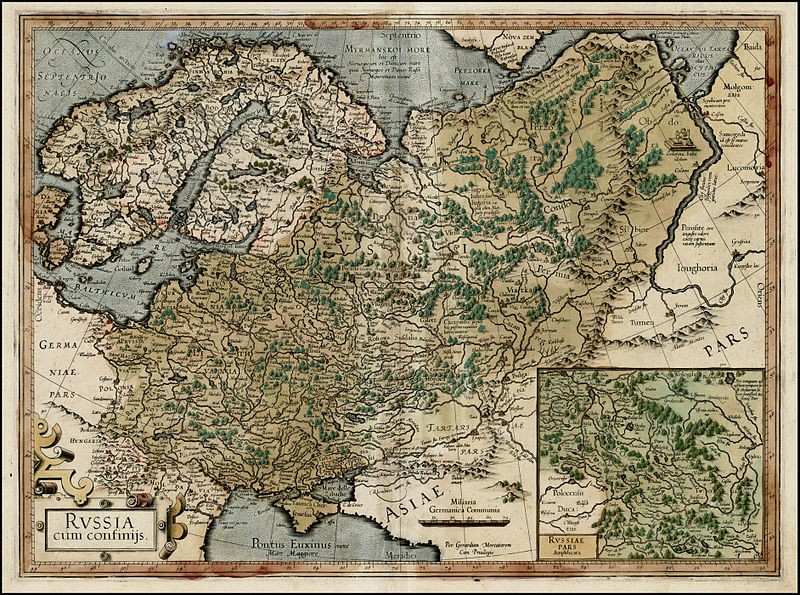
The actual map we will hopefully be able to use the most alongside the reading. Links to other maps to print and use for drill (including blank) here.
Wiki entry on the Grand Duchy of Moscow (1340-1547) and Tsardom of Russia (1547-1721).
A cool looking map here.
Maps showing progression/expansion of the Grand Duchy of Muscovy. Click the years on the left sidebar to see changes.


Cool old looking illustrated map (pictured above).
Online bio of Ivan the Terrible.


Site for general info about Russia (including historical and modern facts).
Some helpful wikis: Tsardom of Russia and Anthony Jenkinson (Muscovy Trading Co., 1529-1610)

Saturday, November 24, 2012

Shakespeare: King Lear


This play is one of the few of Shakespeare´s that can be pinpointed exactly as to when it was written. Isn't it cool to know that this play was performed for King James and his Court in the Christmas holidays of 1606?! And here we are nearing the same time of year ourselves! Interestingly, written into the play, there is a probable reference made by Gloucester to several eclipses that took place in 1605! A story familiar to many of the time, it is taken from a well known fable that was commonly inserted into an undocumented period of English history (which we read about last year in Birth of Britain), is actually referred to in Spenser´s Fairie Queen (which we are reading this year!! ...connections galore!), and had already been made into a play prior to Shakespeare´s version.

Despite the fact that the commentary I read said this play is a particularly difficult one, I still think this is going to be one of my favorite plays so far. It may even come to be a close rival to Cymbeline. The consequences of unchecked pride and unbridled anger are brought to our attention by means of a captivating story. I can´t wait to get further!

I´ve worked out three options for scheduling the play over a 12-week term. See/print the alternate schedules here. We'll read the play in 9wks. We'll include an intro, informal play & movie, if I can find a good version. Here's the schedule we'll follow:

Week 1: Intro: (read Lamb's? draw character map)
Week 2: Act 1, Scene 1
Week 3: Act 1, Scene 2 - 4
Week 4: Act 1, Scene 5 – Act 2, Scene 2
Week 5: Act 2, Scene 3 – 4
Week 6: Act 3, Scene 1 – 6
Week 7: Act 3, Scene 7 – Act 4, Scene 3
Week 8: Act 4, Scene 4 – 6
Week 9: Act 4, Scene 7 – Act 5, Scene 2
Week 10: Act 5, Scene 3
Week 11: Informal play
Week 12: Perform recitations chosen from selected excerpts OR watch movie of play (if applicable).


helpful links:
King Lear on Librivox.org
King Lear on youtube.com (1971 version) - Parents should preview, I have not.
AO Shakespeare Rotation
Site that highlights monologues from Shakespeare's plays - men's parts, women's parts - (thanks, Nancy!)
Shakespeare: Cymbeline
Shakespeare: for all ages
What's so great about Shakespeare?
Who's Afraid of the Big Bad Bard? (...seeing local performances adds immensely to the Shakespearean experience)

Monday, November 19, 2012

Now, here's a beaut!


This guy was seriously huge. and SUPER interesting. really awesome color, too!
We haven't figured out what he is yet, though, so if anyone has an idea, do share ;)
 
:: UPDATED! ::
i'm SO glad you all inspired me to look him up! he wasn't super easy to find, even though y'all were right in identifying him as a click beetle. i wasn't totally sure based on my field guide's description, but the online pictures helped to narrow it down a LOT. there are a ton of click beetles. i never would've known it. he's not overly photographed though, as the only "green click beetles" i found initially were here and here. but after all is said and done, i even found a book written about them! woot! i did not however feel inspired by the title to read it: Larvae of Alaus myops, A. oculatus, Chalcolepidius porcatus, Hemirhipus apicalis and generic larval characterization... but you can download it here. :) you're welcome. ;)

in the end i was able to narrow it down by googling "elateridae green" (the slightly less scientific terminology of green click beetle was not successful), and later narrowed it down to Chalcolepidius porcatus, though he might be a Chalcolepidius virens, wiki info:

Kingdom: Animalia (Animals)
Phylum: Arthropoda (Arthropods)
Class: Insecta (Insects)
Order: Coleoptera (Beetles)
Family: Elateridae (Click, Firefly and Soldier Beetles)
Genus: Chalcolepidius
Species: C. porcatus OR C. virens

::

Linking up again here for November...


Click on the butterfly to link up your own November nature study posts to share!
To join in the fun, just leave your link in the comments & snag the button too if you wish. :)


Oh! and don't forget...
CM Blog Carnival coming up soon!


Coming soon!
*oops!* edit: carnival will be hosted @ SeeJamieBlog :)
  • Submit your posts by clicking on the carnival button above :)
  • Deadline for submissions is Monday, November 26
  • As always all posts on any CM-related topic are welcome and will gladly be included.
  • Completely optional topic for discussion: Principle #20, concisely rendered thus:  We allow no separation to grow up between the intellectual and 'spiritual' life of children, but teach them that the Divine Spirit has constant access to their spirits, and is their Continual Helper in all the interests, duties and joys of life.

Saturday, November 10, 2012

It's a jungle in here!

That's right. It's a jungle IN here... meaning, in my house.
We live in the jungle, and sometimes we've found it's difficult to keep the jungle outside the house.

We've found tarantulas, centipedes, lizards, rats, and get this... the latest find was a snake, INSIDE our house. So, you can imagine my dismay at people's terrified state when having been called upon to kill a spider that's like a whole inch in diameter!
No really, I understand.
I used to be that way.

:)

So, wanna see the snake? He was just a little guy (40ish cm).


Oh, and they say he's blind... which might even make you feel a little sorry for him. But he isn't really. I was happy to discover he was nonvenomous and that he is helpful. He eats stinging ants and their larvae. So, he's one of the good guys. Now that you know a little more about him, would you like to keep him as a pet? 

I thought about it.

But my husband forbade me. Yes, that man who brought home a baby alligator. Yep, he's the one. That, and our pets don't tend to fare well for some reason (except the parrot, he's good now that he's in a cage). So, after we got a real good look, we let the not-really-blind snake go.

Oh, and here's who I found last night near the bathroom...


He's pictured slightly bigger than life size, at 9cm-ish.
He's missing some legs, but don't let him fool you or make you sorry for him.
He's full grown, he bites and he's poisonous.
I smashed him flatter than a pancake!

 
It's FUN to share and encourage each other with nature study!
That's why I'm linking up again this month, with Nature Study Monday: November.
Please feel free to share your nature study posts this month on your blog,
and then link them up by clicking the button below:


Helpful Links:
The low-down on the Blind Snake, aka Typhlopidae. More here.
Interesting facts on the Blue Legged Centipede, aka Scolopendra polymorpha
Nature Study Monday: November Link-up

Tuesday, November 6, 2012

Psst! ...don't forget!


Coming soon @ SimplyCharlotteMason!
  • Submit your posts by clicking on the carnival button above :)
  • Deadline for submissions is Monday, November 12
  • As always all posts on any CM-related topic are welcome and will gladly be included.
  • Completely optional topic for discussion: Principle #19, concisely rendered thus:
"Therefore, children should be taught... that the chief responsibility which rests on them as persons is the acceptance or rejection of ideas..."

Monday, November 5, 2012

Nature Study Monday: November


Last year in my nature journal, I started listing the changes we saw taking place every month. A book of firsts, if you will. In doing this, we have finally seen that we DO in fact have some seasonal changes in this land of perpetual summer, so very near to the equator, so consistently warm and moist.

Here's the list for September - October as currently seen in my journal...

in tarapoto, san martin:
september
  • orange, yellow, pink blooms on trees throughout the area. first spotted on the way to yurimaguas.
  • red star shaped lilies in bloom in the city and out in the campo.
october
  • pomarosa trees bloom and carpet the ground beneath in a stunning fluorescent pink.
in trujillo, la libertad:
october
  • cacti were 'blooming' with bunches of little reddish yellow 'apple' looking blooms covering the topmost points and edges.

It will be fun to keep compiling observations and later to compare years!       :)


This is the place for you to link up to your own November nature study posts to share!
To join in the fun, just leave your link in the comments & snag the button too if you wish. :)

Saturday, November 3, 2012

32+ hours of Peru.

It took 32 hours(+) to cross Peru from east to west and then back again.
I've got the pictures to prove it.
:)


There's one picture per hour, plus some, but unfortunately they're not pictured here by order taken.

Friday, October 26, 2012

P.S. Carnival is coming!


Coming soon!

  • Submit your posts by clicking on the carnival button above :)
  • Deadline for submissions is this coming Monday, October 29 (5pm PST)
  • As always all posts on any CM-related topic are welcome and will gladly be included.
  • Completely optional topic for discussion: Principles 16 &18, loosely rendered thus:
"(16) There are two guides to moral and intellectual self-management to offer to children - 
'the way of the will' and 'the way of the reason.' (18) The way of reason: " ... "

Read the principles in their completeness, here. :)

Monday, October 22, 2012

aahhhh. nature study :)


out in the field, looking...


...back at home, sketching


more nature study links:
Nature Study Outing: Week 9 - Joyous Lessons
First Rain - living CM in California
Nature Journal inspiration
Using field guides in nature study
Nature study one of the constants

p.s.
... linking this post to nature study monday's october post :)
just click to link your nature study posts too!

Friday, October 19, 2012

Knocking at Will.


LXVII

A deed knocks first at thought,
And then it knocks at will.
That is the manufacturing spot,
And will at home and well.

It then goes out an act,
Or is entombed so still
That only to the ear of God
Its doom is audible.

Emily Dickinson

Monday, October 15, 2012

Pursuing the Way of the will...


According to some sources, every one of my kids (my husband and I as well), would probably be categorized as "strong-willed". If I didn't know better, I'd say that strong-willedness was a Tuttle family trait. :) But what would you say, if I told you, that we were actually born very weak-willed individuals all?

Charlotte helps clarify how things really are when she explains, "The baby screams himself into fits for a forbidden plaything, and the mother says, 'He has such a strong will.' The little fellow of three stands roaring in the street, and will neither go hither or thither with his nurse, because 'he has such a strong will.' He will rule the sports of the nursery, will monopolise his sisters' playthings, all because of this 'strong will.' ...But, all the time, nobody perceives that it is the mere want of will that is the matter with the child. He is in a state of absolute 'wilfulness,'––the rather unfortunate word we use to describe the state in which the will has no controlling power; willessness, if there were such a word, would describe this state more truly." (v1 p321).  If you'd like to read more about 'will training', click here, and see helpful links below.

So, as it is, in our family, weak wills are constantly being stretched and strengthened. Every one of us has come a long way... and yet we still have a long way to go. :) The following excerpt pertaining to the will, is a modified example of what I write down periodically in my 'Mother's Diary'. Read more about that here (v2 p106).

For me lately it is cooking. I've never really liked to cook. And for some reason, in recent weeks, it's become more of a chore. But someone must cook, or there'd be certain mutiny among my crew. And we'd be very, very hungry. So, even though I don't want to cook, and wish someone else would do it, I know that I ought to. So I do. Many days I can think of a thousand things I'd rather, and so have to will myself to do it; twist my own arm, so to speak. Now, I've taken measures to make it easier on myself, like having a plan, organizing my recipes, delegating some tasks, etc. But do I really have to *like* to do it?! I don't know. But I do know that the hours preceding dinnertime would be a lot less miserable if I could find a way to be cheerful about it. :) So, my next step in pursuit of the way of the will is to approach cooking cheerfully, without even a hint of complaint. And believe me, this is gonna be huge! My plan is to think about something else. Listen to a sermon, an audiobook? I don't know what, but changing one's thoughts is a very CMish idea, and one I fully intend to employ. :)

Then, there is one of us who is strengthening his will muscles in the area of math. This certain someone does not enjoy taking time to attend closely to the math lesson. He does not enjoy using his time to do his math exercises. This, for him is a huge daily feat of the will.

Another certain someone, who shall also remain nameless, has by way of the will, been overcoming in the area of copywork. Even though this person has special talent in this area, for some reason it had become a burdensome and most dreaded task. Being made aware that the way to victory lay in taking it in manageable sized chunks, and going straight to task to get it over with quickly, has been key for this person.

Then there is one who usually makes it his business to be the most attention loving groupie wherever two or more are gathered. He has a most perpetual test of will power especially during school hours: having to will his pencil not to drum, his feet not to tap, his tongue not to click, his chair not to tip, his voice not to burst out with every answer... etc. maybe you know someone like this. If you don't have one in your homeschool, be very, very glad. :)

The cutest little someone in the family is currently valiently working on willing herself not to suck her thumb, the sweet chick. For such a small person, she's admirably facing this gargantuan exercise of the will, and though she's had some setbacks, she's doing a fantastic job.

Lastly, there's the one who seems to do everything well, and get along with just about everybody all the time. But even this one doesn't escape the occasional test of will, and is currently working on willing to obey right away, because otherwise forgetfulness sets in immediately within ten seconds or so.

These are some of the tests of will we've been facing lately.
How 'bout you? What are some areas you have seen improvement by working on willing?

"The will is the controller of the passions and emotions, the director of the desires, the ruler of the appetites." v1 p320


helpful links:
The Will -- The Conscience -- The Divine Life In The Child
Looking for an easy read? Simply Charlotte Mason has a free book called "The Way of the Will", where they've gathered some of the most important CM quotes and put them together in a easy-to-digest format.

Friday, October 12, 2012

P.S. Don't forget. :)


Coming soon!


  • Submit your posts by clicking on the carnival button above :)
  • Deadline for submissions is Monday, October 15
  • As always all posts on any CM-related topic are welcome and will gladly be included.
  • Completely optional topic for discussion: Principles 16 & 17, loosely rendered thus:
"(16) There are two guides to moral and intellectual self-management to offer to
children - 'the way of the will' and 'the way of the reason.' (17) The way of the will: " ... "

Narration: A little prep goes a long way {pt.2}

“Let the boy read and he knows, that is, if he must tell again what he has read.”
Charlotte Mason, vol 6 pg 262
If it is true that, as one writer put it – we narrate and then we know – our children's comprehension of the material then, not to mention their retention of it, depends on narration. It would seem that it's of utmost importance and that we had better get it right, hadn't we?


I love this picture as an illustration for this subject. 
It reminds me of how we are always there to help if need be.
Yet we allow the child to have the full experience in education; 
to come face to face with his own reality, his circumstances, himself.
"The message for our age is, Believe in mind, and let education go straight as a bolt to the mind of the pupil." 
Charlotte Mason, vol 6 pg 261
As parents/teachers, just what do we have to do with narration?
"This, of getting ideas out of them, is by no means all we must do with books. 'In all labour there is profit,' at any rate in some labour; and the labour of thought is what his book must induce in the child. He must generalise, classify, infer, judge, visualise, discriminate, labour in one way or another, with that capable mind of his, until the substance of his book is assimilated or rejected, according as he shall determine; for the determination rests with him and not with his teacher." 
Charlotte Mason, vol 3 pg 180

"We as teachers offend deeply in this matter. We think that we shall be heard for our much speaking and we repeat and enforce, explain and illustrate, not altogether because we love the sound of our own voices, but because we depreciate knowledge, we depreciate children, and we do not understand that the mind and knowledge are as the two members of a ball and socket joint, each of them irrelevant without the other." 
Charlotte Mason, vol 6 pg 258
So, the getting of ideas and the putting of them into order belongs to the child. And according to the quote above, it seems there are ways we can hinder our children.

Circumstances and books vary. Some may be starting out with very young children. Others may be coming to a Mason education midway through. Still others will be adapting to special needs in their families. Many times troubles arise, and suddenly, we think we need to take things into our own hands. In order for them to get everything (something?) out of the reading, I've got to ask them QUESTIONS. Especially, leading or probing questions to prompt their memory. Right?!
No way! Listen to what CM says,
"Given a book of literary quality suitable to their age and children will know how to deal with it without elucidation. Of course they will not be able to answer questions because questions are an impertinence which we all resent, but they will tell you the whole thing with little touches of individual personality in the narrative."
Charlotte Mason, vol 6 pg 261

"When a child is reading, he should not be teased with questions as to the meaning of what he has read, the signification of this word or that; what is annoying to older people is equally annoying to children... Direct questions on the subject-matter of what a child has read are always a mistake. Let him narrate what he has read, or some part of it. He enjoys this sort of consecutive reproduction, but abominates every question in the nature of a riddle. If there must be riddles, let it be his to ask and the teacher's to direct him the answer. Questions that lead to a side issue or to a personal view are allowable because these interest children––'What would you have done in his place?'"
Charlotte Mason, vol 1 pg 229
The only really helpful questions then, are those based on the Socratic method which tempt the listener to apply a moral or lesson to their own life.

If lotsa questions don't help, by golly, what else can we do?

Primarily, we help by giving patience, time and practice in narrations. After that, more patience, more time and more practice. And then? Still more patience, time and practice. :) You get the picture. But, Charlotte also recommends several other ways that the teacher can help without getting in the way of the reader and his mind feast. Two of these come in the way of preparation before the work of narration is done.
"The Teacher's Part.––The teacher's part is, in the firstplace, to see what is to be done, to look over the of the day in advance and see what mental discipline, as well as what vital knowledge, this and that lesson afford; and then to set such questions [see acceptable types of questions above] and such tasks as shall give full scope to his pupils' mental activity."
Charlotte Mason, vol 3 pg 181
Pre-reading Prep:
Giving an introduction to a reading is sometimes helpful if not downright necessary. Remember, that as educators, we want to stay out of the way as much as possible. The purpose of an intro would be to aid the student's understanding, in a way so as not to interrupt the reading. It is NOT a supplement to the story. It is not a teacher dictated lesson. It is only soil preparation, as it were, so that the child may listen unencumbered by things too difficult. A helpful introduction might include, explaining difficult vocabulary, noting important names and highlighting any mapwork pertinent to the reading. Books that might benefit from a quick overview include, history titles, science reads, and a few more specifically: Parables of Nature, Our Island Story, Pilgrim's Progress and Marco Polo. But as is often the case, after recalling what happened in the last chapter, an intro won't even be necessary.
"Do always prepare the passage carefully beforehand, thus making sure that all the explanations and use of background material precede the reading and narration. The teacher should never have to stop in the middle of a paragraph to explain the meaning of a word. Make sure, before you start, that the meanings are known, and write all difficult proper names on the blackboard, leaving them there throughout the lesson. Similarly any map work which may be needed should be done before the reading starts."
Next, a simple reminder before the reading begins, that the student will be narrating when the reading is over, would not be out of place. Just quickly say, "Listen and let the words paint pictures in your imaginations. When I stop, I'm going to ask someone to tell back the story. If it is your turn to tell, you might even choose to use some of the same words from the story! Everyone should be paying close attention."

Pre-narration Prep:
Don't forget! The goal of the following tips is simply to help the teacher stay out of the way as much as possible.

1. Keeping those names of important people and places in the story written and within eyeshot can be SUPER helpful (use the same list of words/names you used as an intro to the reading). Being able to refer back to these, should help the narrative flow. This is very practical with those books you are reading aloud, but even in those early years if your child is reading some of the more difficult books alone, he/she will still benefit from an occasional intro and/or having difficult vocab and/or names written out ahead of time.

2. It also helps to have a few moments (even a half hour or so) to seriously reflect before giving a narration. Sometimes, when put directly on the spot, a student won't do well. He/she can't think of anything or perhaps their thoughts are still a little muddled and they feel frustrated having to put words to them. Maybe they've gotten hung up on an idea planted by something they heard in the story that they need time to process before having to move on to the work of narration. Giving them just a few minutes to order their thoughts with a few of the following prompts can work wonders.

Sometimes, when the reading was difficult, or we've been a bit distracted, I give my younger kids some extra prompts, "Take a minute to remember back to where we started reading. [pause] Can you remember what happened first? [pause] okay, got it? After you've thought for a minute, start as soon as you're ready." This seems to help them to put it in sequence.

3. And finally, for older children, knowing that they can jot down notes, or make lists or marks in the margins of their books, may help them to better formulate their narrations, and avoid a second reading. The students might write down their own questions that cover the reading, or enumerate a series of points made, or any other variety of activities that will help them to own the material for themselves.
“Let marginal notes be freely made, as neatly and beautifully as may be, for books should be handled with reverence. Let numbers, letters, underlining be used to help the eye and to save the needless fag of writing abstracts. Let the pupil write for himself half a dozen questions which cover the passage studied; he need not write the answers if he be taught that the mind can know nothing but what it can produce in the form of an answer to a question put by the mind to itself."
But let this be a warning to us all...
"Disciplinary Devices must not come between Children and the Soul of the Book.––These few hints by no means cover the disciplinary uses of a good school-book; but let us be careful that our disciplinary devices, and our mechanical devices to secure and tabulate the substance of knowledge, do not come between the children and that which is the soul of the book, the living thought it contains.”
Charlotte Mason, vol 3 pg 181
Join me again next time in thinking how we might approach correcting narrations.

Posts in this series:
And then, like, well... and other narration woes. {pt.1}
Narration: A little prep goes a long way {pt.2}  <- -="-" are="are" b="b" here="here" you="you">
Narration: Correcting sloppy speech {pt.3}

Monday, October 8, 2012

Nature Study Mondays - October


So, I'd really like to continue Nature Study Monday posts as a place to collaborate and compile nature study love and inspiration... but I'm still trying to figure out a feasible format for blogging it, the most do-able for me, and at the same time, fun and helpful for everyone. I've decided to post Nature Study Monday posts on a monthly basis for now. I'll link all my nature study posts for October here, to this very post  (hopefully every Monday!) and I'd love it if you linked up to your posts in the comments too! Just bookmark this post and come back all month long. Maybe even someday I'll get all high tech and add a linky ;)


Share your October nature journal entries, your nature photos and nature experiences right here! 
{leave a comment!}
P.S. Snag the button and add it to your post, if you feel so inclined.


Friday, October 5, 2012

I've got mail!

Look what came in the mail yesterday!
Can you guess which things I'm MOST excited about?!


This is not everything in the box... just what was left after the main looting had taken place ;)

Normally, from the U.S. to the bigger cities in Peru, mail arrives within 7-10 days (or it can, anyway). Imagine my dismay, when after 6 weeks we still hadn't received the box containing the mother lode of chemistry books I'd ordered and was waiting anxiously to hold in my hands. SIX weeks. oh dear.

OH dear.

I refused to think about it until four months had passed. Why four months? Because that's the longest we've ever had to wait for a package; but that one was sent surface mail; back in the old days.

Well, at long last we have the box, and the books, in our possession.

And thanks to my very kind mother, we will also enjoy jell-o (pudding and raspberry), and dark chocolate mint m&m's (not pictured, because, well... do the kids have to know about them?), and punch balls (do you too remember these from the days of your youth?), and erasers (just in time!), and really cute stickers, and magic straws that flavor your milk chocolate-y.

Yep. It was a good day.

Now, I cannot wait til I have a minute, or two thousand to read my books!

Monday, October 1, 2012

Narration: And then, like, well... and other narration woes. {pt.1}


"To begin with, there is nothing mysterious or magical about narration. We all do it. When we have had a pleasant outing or listened to a beautiful concert or seen an exciting play, our first impulse is to tell our friends about it, and how frustrating it is if, when we get home the friends are out or watching a television programme which must not be interrupted. We tell them about it later on, but our account will not have the same vividness and spontaneity as it would have had if we had told it when it was fresh in our minds. This is an important point to remember when we come to consider the method of a narration lesson."   E.K. Manders, PR Article

During the course of the day, I talk. I tell my kids stuff. They hear me say 'so' a lot. I also connect my thoughts with 'and then', a lot. Sometimes, I use 'like' mid-sentence (I know, it's so west-coast. I am hopeful in my belief that I am overcoming this, however). I ramble and fail to connect my thoughts sometimes. All of this has shown itself clearly, in...  well, the way my kids tell stories. Oh yes. It also sometimes comes out when my kids narrate the stories I read to them.

Have you ever had this problem?

I know that at least some of you have. I am actually quite confident I am not alone in this. I am equally sure that there is hope. It is not the end of the world! With a little guidance, practice and time our kids' will improve in speech and narration... and so will we!

"Given absolute attention, and we can do much with four hundred hours a year (1,600 hours in our four years' course) but only if we go to work with a certainty that the young students crave knowledge of what we call the 'humanities,' that they read with absolute attention and that, having read, they know. They will welcome the preparation for public speaking, an effort for which everyone must qualify in these days, which the act of narration offers."  Charlotte Mason, v6p124

It is important to remember some key points about narration.

Narrating is natural. We want to tell what we think about the things we know. The kids will hear a story, and remember *some* things that stand out to them. That's what we want! We want them to remember *some* details, *some* ideas... the ones that start the wheels a turnin'! The ideas that form thoughts that become not just a name, but a picture, a person, a living idea. It will most certainly differ from child to child. And this may very well happen internally, and you may not be aware of its happening.

Let's help them (by example and other means) to tell their stories well. Over the years, I have seen some marked improvement with my kiddos by using some of the following ideas.

Helpful Hints:

Type out their narration verbatim. You could voice record it on the computer, so as not to interrupt or frustrate them by having to ask them to slow down or repeat something.

Have them listen to it, read it over, or read it aloud to them. If it's obvious, this will be enough! :)

You might ask them to count their 'and thens' (or whatever trouble word), or when typing, ask them where you should put the periods, or some such gentle way of pointing out the error.

If they don't notice their extreme run-on sentence structure, you might explain to them what a sentence is, and give examples of different ways of starting one out. Often, I remind them to start the sentence with the person or thing it is about. That makes it kinda easy. I tell them, "Instead of saying, '...and then after that, Napoleon marched his army to...', skip the 'and then and after that' and just start out with the interesting part, 'Napoleon'!"

Gentle ways of making them hear themselves are best. I'm sure you can come up with many of your own that will fit your context best. I tend to think that we probably should draw their attention to it, but not DURING the narration. Let them finish, and then correct if needed.

More things to remember:
  • We teach by example. Even though it may not have occurred to us that we could be part of our children's narration problem, I think a look at some of our own habits of modeling speech would be worth our attention. Enough said. :)
  • Thankfully, many problems tend to fix themselves when written narrations and grammar lessons come into play (usually around y4).
  • Prepping them for narrations will help (I will talk about this in the next post).
  • We correct, by helping them correct themselves (stay tuned for an upcoming post). 
  • Relax, enjoy the stories, and practice.
  • Take your time. For beginners, don't expect too much too soon. Narrating is a complicated skill!
    (see quote below)
::
"How injurious then is our habit of depreciating children; we water their books down and drain them of literary flavour, because we wrongly suppose that children cannot understand what we understand ourselves; what is worse, we explain and we question. A few pedagogic maxims should help us, such as, "Do not explain." "Do not question," "Let one reading of a passage suffice," "Require the pupil to relate the passage he has read." The child must read to know; his teacher's business is to see that he knows. All the acts of generalization, analysis, comparison, judgment, and so on, the mind performs for itself in the act of knowing. If we doubt this, we have only to try the effect of putting ourselves to sleep by relating silently and carefully, say, a chapter of Jane Austen or a chapter of the Bible, read once before going to bed. The degree of insight, the visualization, that comes with this sort of mental exercise is surprising."  Charlotte Mason v6, p 304
I'll be posting more of my thoughts on narration over the next week or two. So, stay tuned!  


Sometimes, we have fun. Just sometimes. ;)

Upcoming posts:
And then, like, well... and other narration woes. {pt.1}  
Narration: A little prep goes a long way {pt.2}
Narration: Correcting sloppy speech {pt.3}

Wednesday, September 26, 2012

Shakespeare: for all ages

It was in the early days*, even before we started schooling, that I first knitted my brows* over the idea of introducing Shakespeare to my own flesh and blood*. What a strange thought for me, considering I am not conscious of having read significant Shakespeare during my own education, let alone my early education. It was still all Greek to me*! Yet, as luck would have it,* AmblesideOnline has Shakespeare on the schedules starting with year one. But the truth be out*, I've been on again, off again with my reading of the Bard with my littlest listeners. In my mind, doubts lingered, Can one start too early? Can there be too much of a good thing*? Recently, I decided is high time* to get out of this Shakespearean pickle I'm in* and figure out just what I think about it.


One of our very favorite things to do when we start a new Shakespeare play, 
is to do a character sketch...  which has been SO, super helpful!

It is a foregone conclusion*, that my ideas are much better developed now than before. For one, by Jove!* I've discovered that a Shakespeare play, as diluted by Lamb or Nesbit, isn't much different from a fairy tale, the value of which I am quite convinced of. The themes in Shakespeare are more real life too, which helps them deal with stony-hearted villains* within a safe context, and that's good. Also, as the kids are familiar with the storyline, they'll be excited at how much they'll be able to understand when they revisit the play later on. That's good too.

Seemingly without rhyme or reason*, however, I have this recurring feeling that I'm doing my kids a great injustice; big spoilers and all, giving away all the story lines WAY ahead of time. All my newly found reason and resolve begin to vanish into thin air*, until I revisit a quote like these:

"Little by little the people of Shakespeare, filling a larger world than she could know, became as real to her as her friends. That was the great gift he brought her."
~Shakespeare and the Heart of a Child, Gertrude Slaughter

"In [Form 2B] they read their own geography, history, poetry, but perhaps Shakespeare's Twelfth Night... should be read to them and narrated by them until they are well in their tenth year. Their power to understand, visualise, and 'tell' a play of Shakespeare from nine years old and onwards is very surprising. They put in nothing which is not there, but they miss nothing and display a passage or a scene in a sort of curious relief.
Charlotte Mason, v6p182


or then, there's these:

"...a child has entered into Shakespeare's Temple of the human spirit and come forth charged with a knowledge far beyond his present or his future experience. It cannot all happen on a summer day. Step by step, slowly and serenely, under a clear sky, the child approaches by pleasant ways to an understanding of life... and a sane and healthy joy of life is entrenched in the child's mind against the blows of fortune by the beauty of the medium through which the world has been revealed."
~Shakespeare and the Heart of a Child, Gertrude Slaughter

"The transition to Form IIA is marked by more individual reading as well as by a few additional books. The children read their 'Shakespeare play' in character. "
Charlotte Mason, v6p182

And then of course there are blog posts like this one, that really help me get a grip on things. So, if the truth be known*, I'm feeling pretty good lately about reading Shakespeare with my kids of all ages.

"In Forms III and IV... They have of course a great flair for Shakespeare, whether King Lear, Twelfth Night, Henry V, or some other play..."
Charlotte Mason, v6p184


Like this idea? See my recent Cymbeline post here for more... :)


Helpful Links: 

Helpful Books:
**See amazon links below (yep, you can click there to support our homeschool habit!) 

For youngsters:
Shakespeare, Bard of Avon
Shakespeare coloring book (paper dolls)Tales from Shakespeare  (download in various formats) or get the audio @ Librivox.org

For elders:
Brightest Heaven of Invention


Well, that, my friends, is the long and short of it*. *Of course, every time you see an asterix above, you are seeing one of many of our common figures of speech that were invented by Shakespeare. For goodness' sake*, who knew?! See more here and here.

Tuesday, September 25, 2012

happy days.


...just thought i'd share a smile with you! ;)
i hope your day has been full of pleasant surprises.

Saturday, September 15, 2012

Shakespeare: Cymbeline


"The story of Cymbeline is elaborate, complicated, and farfetched even for an Elizabethan play; and it includes nearly every ingredient known to melodrama. The central theme concerns a young and innocent girl, married for true love, who is harassed by a wicked step-mother, ill-treated by her father, pursued by a hated and boorish brute, falsely accused of unchastity, forced to flee in disguise as a boy, befriended by savage mountaineers (who are natural gentlemen and turn out to be her long-lost brothers), and finally triumphantly restored to her repentant husband. In addition, we are given such stock items as a faithful servant, a good doctor, a penitent villain, heroic Britons, chivalric Romans, battle scenes, a prison scene, ghosts, music, abundant moralizing, drugs which produce the appearance of death, a severed head, and even the convenient birthmark - a "sanguine star" - by which the lost heir is at last recognized and restored."
G.B. Harrison, The Complete Works of Shakespeare


The play in 12 weeks:

Week one:
Read Cymbeline from Tales from Shakespeare
Draw Character list

Week two:
Read Act I, Scenes 1-2

Week three:
Read Act I, Scenes 3-5 - Act II, Scene 1 (edit, omit parts or skip scenes 4 & 6)

Week four:
Read Act II, Scenes 2-4 (edit, omit Iachimo's speech or skip scene 2; edit or omit scene 4)

Week five:
Read Act II, Scenes 5 - Act III, Scene 3

Week six:
Read Act III, Scenes 4-5

Week seven:
Read Act III, Scene 6 - Act IV, Scene 1

Week eight:
Read Act IV, Scene 2

Week nine:
Read Act IV, Scenes 3 - Act V, Scene 3

Week ten:
Read Act V, Scene 4

Week eleven:
Read Act V, Scene 5

Week twelve:
Arrange an informal play


Helpful Notes:
  • Reading first from the Tales from Shakespeare version, is completely optional; but very helpful. Based on this pre-reading, a sketch of characters can easily be drawn up. If this step is skipped, the initial sketch could be started, then revisited and elaborated as the play develops and new characters are introduced. Having established a familiarity with the storyline allows for better understanding, as well as adds to the facility of editing or skipping scenes, when appropriate, as may be necessary when reading from the original. 
  • Pre-read. Edit, omit and skip scenes in accordance with students maturity level.
  • Print copies for each student (or a kindle copy), a minimum of six per classroom (there aren't usually more characters than that per scene).
  • Divide up parts ahead of time, according to skill level. A smaller part can be given to a less skilled reader, such as Narrator (reads, characters enter and exit scenes, as well as introducing the setting for the scenes). This can be done 15 minutes before :)
  • Listen to the audio version (see librivox) of the specific scenes to be read on a day before reading aloud, if desired, to maintain short lessons.
  • Follow up by watching the BBC video version of the play (when appropriate or applicable).
  • If students are interested, over the following term, the play could be made into a performance, with memorized parts, costumes and full set.

Saturday, September 8, 2012

Related Posts with Thumbnails

Blog Archive